

our vision
At Roetz, we believe in a circular and inclusive future. We don’t judge a book by its cover: where others see waste and inability, we see useful materials and promising talent.
RE-MANUFACTURING
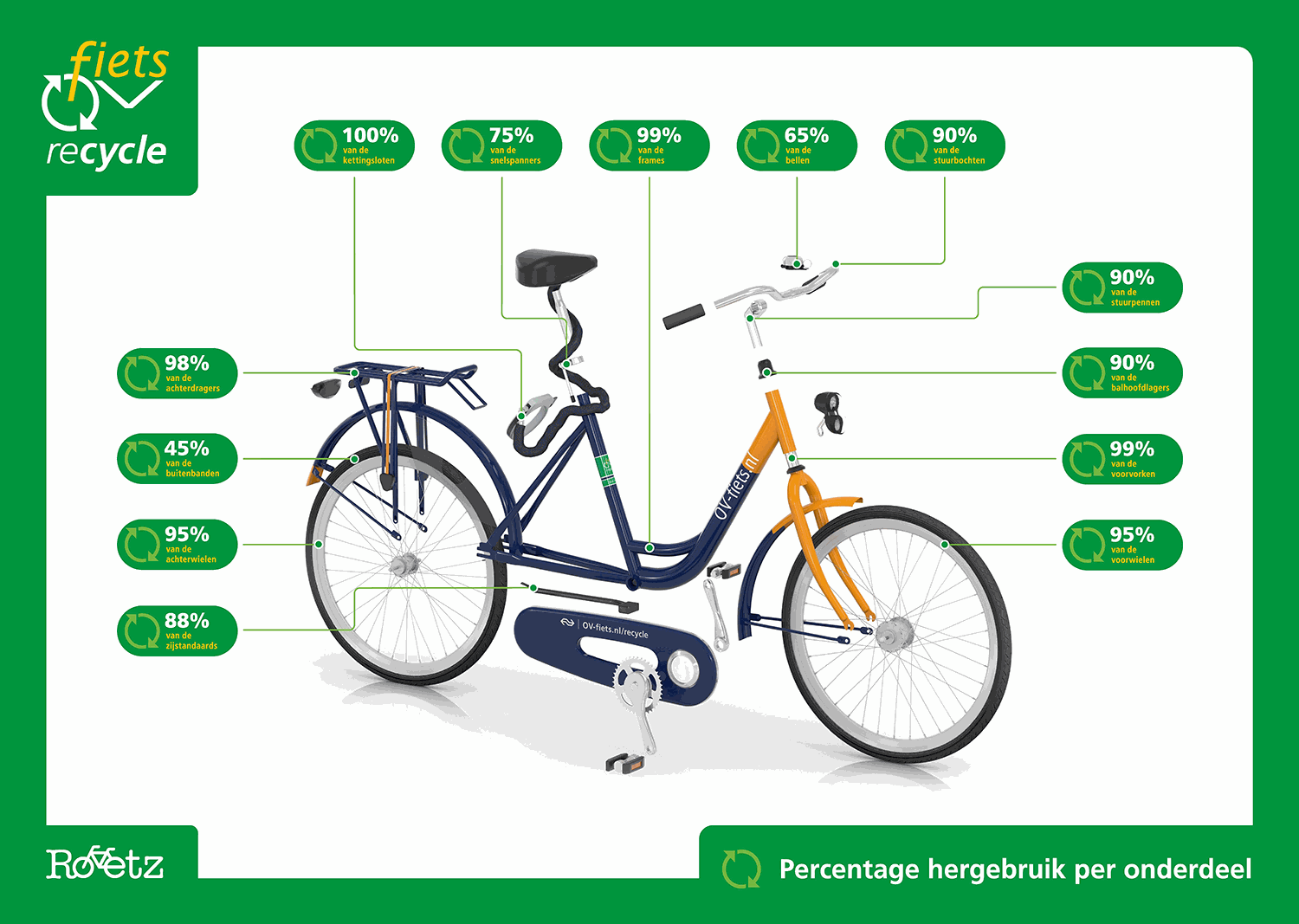
By re-working parts and materials that are too good to be thrown away, we give them a second life. Today, we achieve 40% circularity with our Roetz-Bikes and even 70% by re-working the OV-fiets bike fleet .
circular dreams
What's next? We want to be the first to make a 100% circular bike. This is our dream. We believe that sustainable and convenient mobility should be available to a broad public.
reducing costs
Many hotels, holiday parks, bike rentals and bike sharing platforms face enourmous challenges regarding maintenance and replenishment of their fleets. Remanufacturing bikes at the end of their lifecycle can reduce the total operating costs significantly.
decreasing co2 footprint
Each year, roughly one million bikes are thrown away; even though essential parts, like the frame, are just fine. Moving from a linear to a circular economy helps reduce our footprint.
Making social impact
Our team of makers consists of men and women with poor job prospects, for whatever reason. We train them to become skilled bicycle technicians with a bright and self-reliant future ahead.
why remanufacturing?
cost reduction
Smart re-use of materials, especially with prices rising
saving resources
Take-make-waste is out-dated. Think circular!
Image boost
Shows you want the best for the world
fleet Improvement
Continuous quality enhancements
tangible Impact
As part of a Corporate Social Responsibilty (CSR) strategy